

What Is Sleep Anxiety
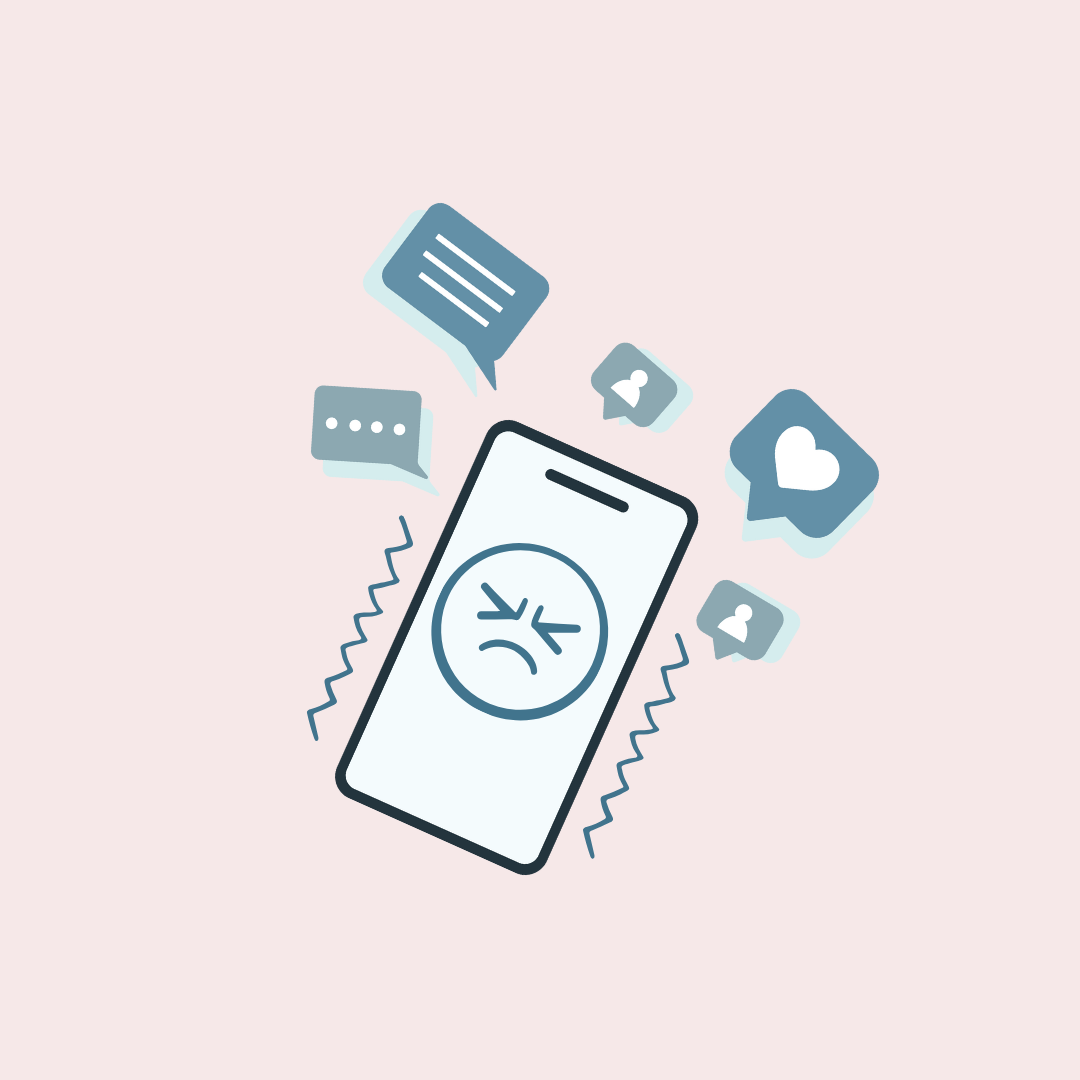
Have you ever felt like your mind is a phone with every notification switched on, buzzing and pinging at full volume, impossible to ignore? Every thought, worry or “what if” pulls your attention back again and again, even when you’re trying to relax. It’s relentless, like a scene from Black Mirror, in which the characters are overwhelmed by the constant intrusions from their phones.
For many people, sleep anxiety feels like this. It’s like having internal alerts that won’t switch off: racing thoughts demanding attention and a sense of being constantly monitored from within. When the world quiets down at night, these alerts feel louder and impossible to ignore.
This post delves more deeply into sleep anxiety, exploring why it happens, how it becomes self-reinforcing and what research tells us about effective ways to address it.
Sleep anxiety defined
Sleep anxiety is a pattern of worry or hyper‑vigilance that becomes especially pronounced when trying to sleep. Many people experience:
Anxiety before bed
Bedtime worry or fear
Racing thoughts at bedtime
Feeling like they can’t sleep because of anxiety
A vicious anxiety–sleep cycle
A sense of anxiety stopping sleep
For some it feels like dread at the idea of going to bed. For others it comes on once the lights go out and the brain suddenly has nothing else to focus on. Either way, night‑time anxiety can become entangled with sleep, making it harder to fall and stay asleep.
This isn’t due to some kind of personality flaw or weakness. Sleep anxiety has biological, psychological and behavioural roots. Researchers are only now fully understanding its complexity.
Why anxiety often peaks at night
One reason anxiety becomes more noticeable at bedtime is actually quite simple: the world gets quieter.
During the day:
There are distractions and demands
Your attention is occupied with external tasks
Nervous system activation is tied to action
At night:
Distractions fall away
There are fewer external tasks to manage
The mind suddenly has space to notice unresolved thoughts
This is much like when you have switched on notifications on your phone. Suddenly you start noticing the little pings. But unlike a phone, your brain doesn’t have a physical “mute” switch you can simply turn off.
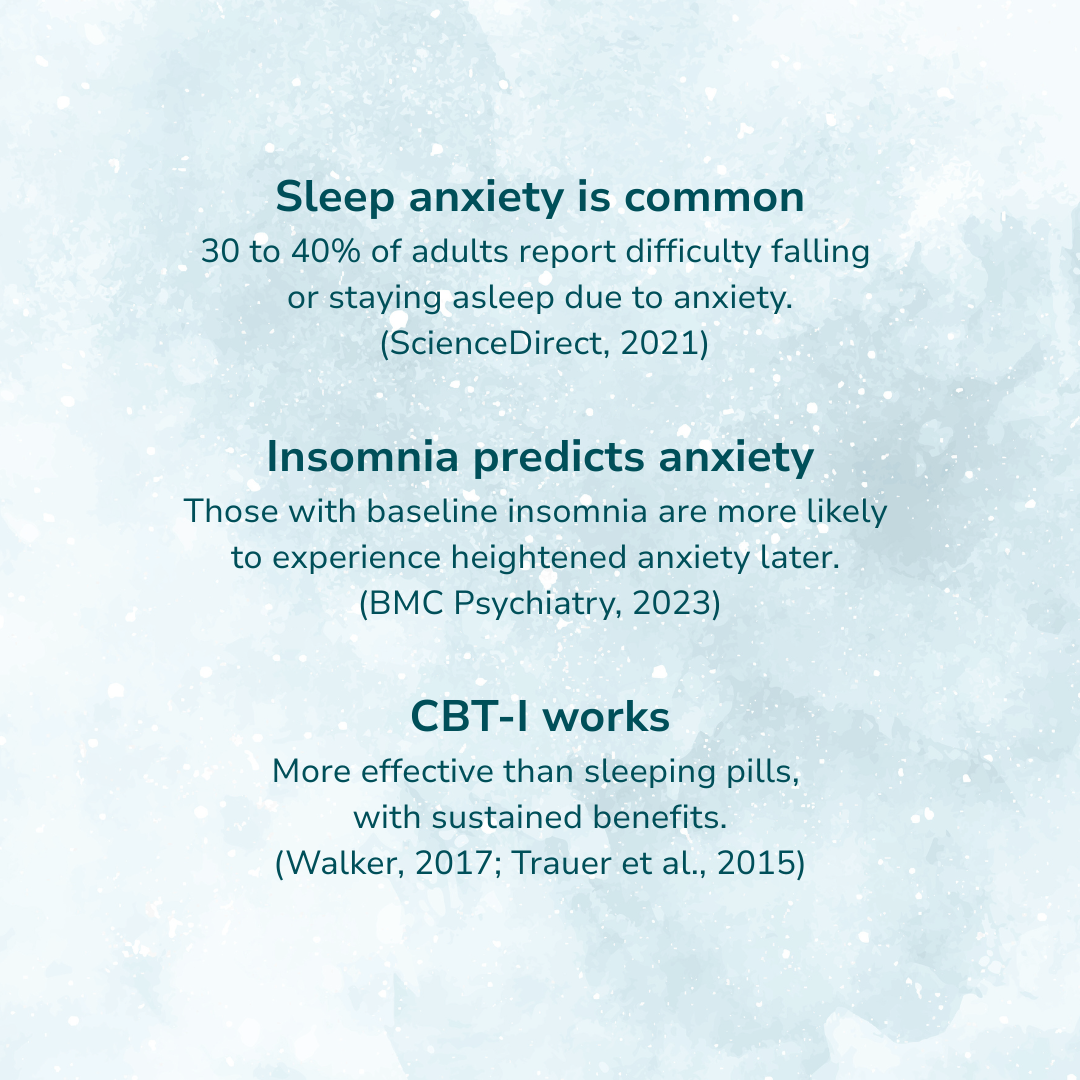
Research shows that the systems regulating sleep and emotional control are deeply entwined. Neurobiological circuits that manage arousal and vigilance in anxiety also influence sleep onset and maintenance, which is why anxiety often worsens sleep quality (Sleep and anxiety: From mechanisms to interventions. ScienceDirect. 2021).
How sleep and anxiety feed each other
Sleep disruption and anxiety often form a self-reinforcing loop.
Insomnia is not just a symptom of anxiety. Longitudinal studies show that baseline insomnia predicts higher levels of anxiety months later (The impact of insomnia on anxiety and depression: a longitudinal study. BMC Psychiatry, 2023)
Understanding this can be liberating: it’s not “all in your head”. It’s a predictable physiological and psychological pattern.
Why it can be hard to acknowledge anxiety as a cause of insomnia
While speaking about our mental health has become more accepted in recent years, anxiety still carries a stigma. People often minimise it in themselves, saying to themselves, “It’s just a bit of anxiety.” “I shouldn’t be worried about this.” “I just need to try harder.”
But anxiety isn’t a personality flaw, weakness or lack of willpower. It’s a biological and psychological system designed to protect you. Very often, it goes into overdrive for good reason: real stress, past experiences, ongoing pressures and physiological factors all shape how alert your nervous system is.
Just like we’ve come to destigmatise depression and recognise it as a health condition, we need to normalise anxiety, especially when it affects something as fundamental as sleep.
The sleep anxiety cycle and why it feels so hard to break
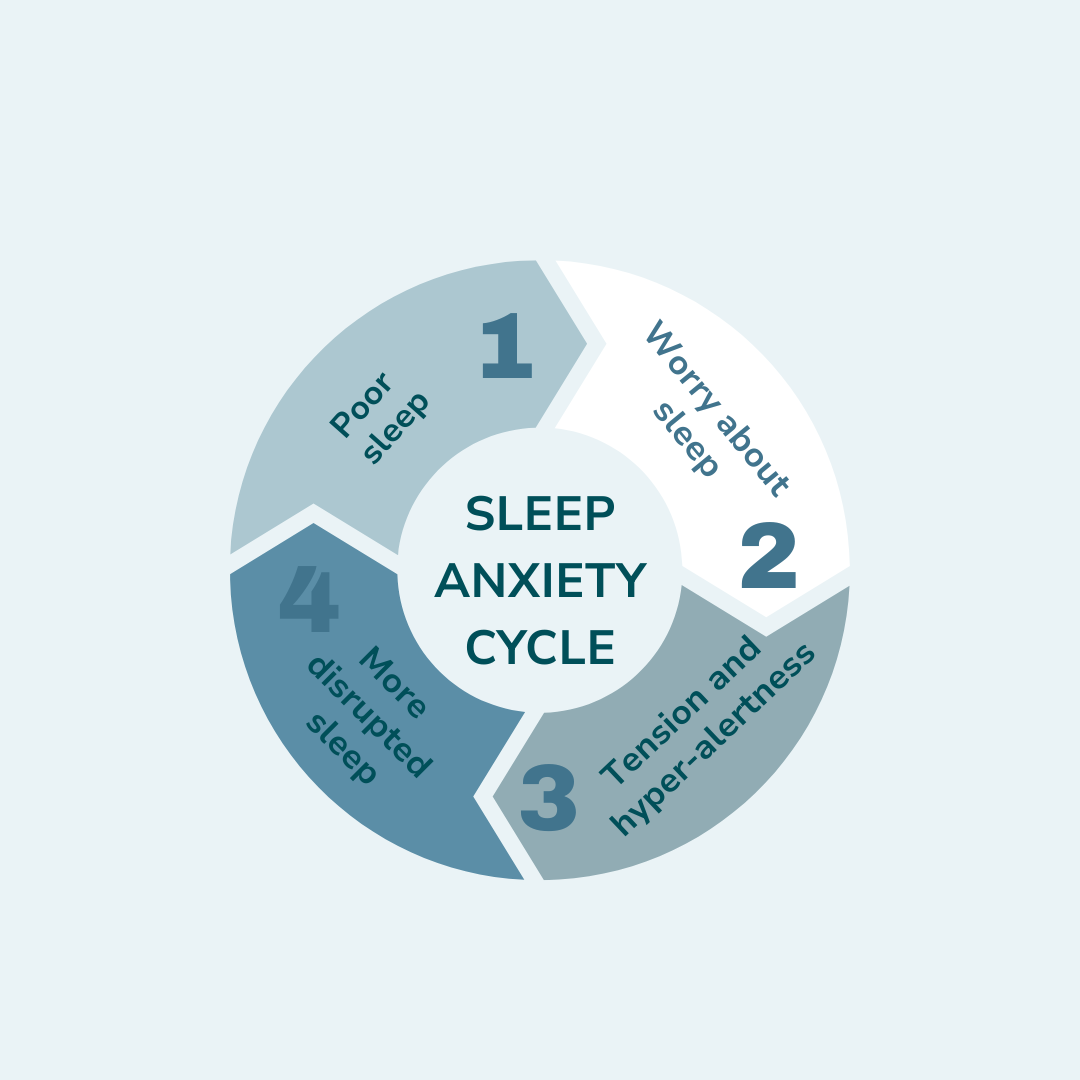
Sleep anxiety can become self‑perpetuating, and this is where it starts to feel like an unbreakable loop:
Poor sleep leads to worry about the next night
Worry increases physiological arousal
Increased arousal leads to difficulty falling asleep
Difficulty sleeping heightens anxiety
This loop can feel completely rational to people living it. After all, of course you’re worried about sleep if it repeatedly evades you. But the worry itself becomes a driver of the problem and not just a response to it.
It’s a bit like having your internal notifications set to maximum: once they start, they keep demanding attention.
CBT and its role in sleep anxiety
Unlike quick‑fix tips or generic sleep hygiene advice, Cognitive Behavioural Therapy (CBT), and specifically CBT for insomnia (CBT‑I), is an evidence‑based approach that targets the very habits and thought patterns that keep the anxiety–sleep loop alive.
CBT‑I doesn’t try to force sleep. Instead, it reshapes the mental and behavioural context around sleep by:
Reducing catastrophic thinking about sleep
Modifying behaviours that unintentionally sustain insomnia
Calming the nervous system’s hypervigilance
Reconditioning the bed and bedroom as cues for rest rather than alertness
A review of numerous studies shows that when compared with passive control groups, CBT‑I significantly improves key sleep outcomes such as sleep onset latency (the time it takes to fall asleep), reduces wakefulness after sleep onset, increases total sleep time and enhances sleep efficiency. These benefits have been observed to persist at least six months after treatment starts, suggesting sustained impact. (Management of Insomnia Disorder. National Library of Medicine)
“CBT-I helps rebuild healthy sleep patterns rather than just sedating the nervous system temporarily.”
CBT‑I vs sleeping pills – what research shows
As discussed in Matthew Walker’s bestselling book Why We Sleep (a text widely referenced in both clinical and popular sleep science), CBT‑I is increasingly embraced by the medical community as a first‑line treatment for chronic insomnia, because it addresses underlying patterns rather than masking symptoms.
Several systematic reviews indicate that CBT‑I may offer more durable benefits than sleep medications over time. For example, CBT‑I’s effects appear more sustainable and come without the risks of dependence and rebound insomnia that often accompany sleeping pills. (Comparative effectiveness of cognitive behavioural therapy for insomnia: a systematic review. Springer, 2013)
This distinction matters: CBT‑I helps rebuild healthy sleep patterns rather than just sedating the nervous system temporarily.
Does CBT also reduce anxiety itself?
This point is crucial for anyone who sees their anxiety and sleeplessness as inseparable.
Research shows that when CBT‑I is applied in people with both insomnia and generalised anxiety disorder (GAD), it leads not only to better sleep but also medium reductions in anxiety symptoms. This demonstrates that addressing sleep directly can help dissolve part of the anxiety that surrounds it. (Anxiolytic impact of cognitive behavioural therapy for insomnia in patients with co-morbid insomnia and generalized anxiety disorder. PubMed, 2023)
Why sleep anxiety is so common (and not your fault)
We can now see why sleep anxiety is both common and insidious:
Sleep and emotional regulation share neurocircuitry (so distress affects sleep and vice versa)
Lack of distraction at night reveals and amplifies internal worries
Insomnia itself predicts increases in anxiety over time
This means sleep anxiety is not a bizarre anomaly. It’s a predictable outcome of how the human brain evolved to manage threats and rest.
This also answers a common question: Why do people feel so much worse about anxiety at night than during the day? This is because night-time removes the external demands that normally occupy attention, leaving unresolved internal alerts in the spotlight.
What this means for you
Understanding sleep anxiety as a learned, reinforced pattern rather than a flaw can be deeply liberating. It helps shift the story from “Why can’t I switch off?” to “Why is my alert system still activated when I want rest?” And this question has tangible answers grounded in neuroscience and psychology.
Just like a phone that never stops buzzing, your mind’s alert system can begin to be tuned down with tools that allow rest to return.
Key takeaways
Sleep anxiety is a pattern of worry and arousal that makes falling and staying asleep difficult.
Anxiety and sleep are biologically intertwined; poor sleep can worsen anxiety, and anxiety can disrupt sleep.
CBT‑I is a well‑researched, first‑line treatment that addresses the underlying mechanisms of sleep anxiety rather than just the symptoms.
CBT‑I can lead to sustained improvements in sleep and can also reduce anxiety symptoms.
Sleep anxiety is not a flaw. It is an understandable response in a nervous system that’s learned to stay on alert.
Sleep can change, even if it’s been hard for a long time.
With the right support, the cycle of anxiety and poor sleep can ease. Sleep therapy using CBT-based tools and hypnotherapy offers a structured, compassionate way forward. If you’re interesting in learning more about how it can help you sleep better, please don’t hesitate to get in touch with me via my contact form.