

NHS Versus Private Sleep Therapy
Sleep problems can be frustrating and exhausting. When insomnia or sleep anxiety starts to affect your daily life, seeking professional support is often the quickest way to get relief. But before booking a session, it’s normal to ask: how much does a sleep therapist cost and is it worth going private rather than using NHS services?
In this post, I’ll explain private versus NHS sleep therapy to help you decide what’s right for you.
NHS sleep support
You might be wondering if you can get sleep therapy on the NHS. The answer is yes – but it is dependent on your situation.
There is certainly support for sleep problems linked to medical conditions such as sleep apnoea, restless legs syndrome, parasomnias (like sleepwalking), narcolepsy, circadian rhythm disorders and other complex sleep problems. These are typically run through hospitals’ respiratory, neurology or sleep medicine departments, such as those at Guy’s and St Thomas’ or Royal Brompton & Harefield hospitals.
When insomnia is driven primarily by anxiety, stress or long-standing sleep patterns, support can be more variable. Some NHS services do offer CBT-I (Cognitive Behavioural Therapy for Insomnia), often through community mental health pathways, but access depends on location, availability and waiting lists.
NICE (the UK’s health guideline body) and national NHS guidance describe CBT for insomnia (CBT‑I) as the first‑line treatment for chronic insomnia because it targets the behavioural and cognitive factors that maintain sleep problems. Research has shown that it is more effective and longer lasting than medication.
CBT (including CBT‑I in some areas) is available free through NHS “Talking Therapies” services, which you can access either by GP referral or, in some areas, by self‑referral.
Once referred, you typically:
Have an initial assessment with a therapist
Are offered a course of sessions based on need
May receive CBT‑I, if insomnia is judged a primary concern
Across NHS services generally, CBT (for any condition) is described as lasting between 5 and 15 sessions, depending on the issue being treated.
What are the NHS waiting times for sleep therapy?
Although CBT‑I is recommended, access through the NHS is patchy:
CBT‑I is not universally available everywhere in the UK. Some areas offer group sessions, some individual support and in others access is limited or absent.
Reported local waiting times for CBT‑I through NHS services can easily exceed three months, and some areas report significantly longer waits due to limited specialist capacity.
Even where CBT‑I is technically available, not all NHS therapists are trained at an insomnia‑specific level, so access may default to general CBT or brief interventions, which might not be as tailored as specialist sleep therapy.
This mismatch between guideline and delivery is widely recognised; despite NICE guidance, many patients report limited access or long waits, especially for specialist insomnia care.
Digital CBT‑I tools available on the NHS
Where local funding exists, some areas make digital CBT‑I programmes available (for example Sleepstation), helping more people access structured care without face‑to‑face waiting lists. This may be a great option if you find digital tools helpful and are self-disciplined.
Private sleep therapy in the UK
Private options are increasingly popular for those seeking personalised help and faster access.
Typical Fees
Single sessions: £70–£100 per hour
Package of 6 sessions: £400–£600 (often better value and promotes commitment)
For example, my fees for sleep therapy online or in Worcester start at £80 per session, with the option to sign up for a cost-effective package. This allows for step-by-step support using CBT sleep therapy techniques and hypnotherapy. I also accept payment by instalments to help spread the cost.
Benefits of private sleep therapy
Faster access with no long waiting lists
Specialist therapy focusing on the specifics of sleep problems and insomnia
Personalised approach tailored to your patterns and anxiety triggers
Greater opportunity to benefit from a variety of therapeutic techniques according to personal needs
As it is targeted, specialist care, treatment averages 6 to 8 sessions, with good results usually being achieved in the first few sessions
Flexibility – can be delivered as a mixture of online and in-person sessions
Is private sleep therapy worth the cost?
It’s completely understandable to pause when you see the price of private sleep therapy. On the surface, it can feel like a big investment. But when you look closer at what you actually get, the value becomes clear.
Private sleep therapy isn’t just a 60-90 minute chat. Each session includes:
Thorough, personalised workups before each of your sessions by the therapist to ensure your unique sleep patterns, anxiety triggers and lifestyle factors are analysed and treatment is tailored to you specifically
A broad range of evidence-based strategies combining CBT techniques, hypnotherapy and other methods to tackle the root causes of insomnia
An enjoyable process, which can be very relaxing, enlightening and transformative
Follow-up support between sessions, including summary emails, audio recordings and practical resources to help put insights into action
Expert and compassionate guidance from a trained and committed sleep therapist who stays focused on helping you create lasting change
All of this is designed to save you time, reduce frustration and get results faster than trying to figure it out alone.
Think of it this way: investing in sleep isn’t just about the night, it’s about how you feel during the day. Better sleep can mean more energy, calmer thinking, improved focus and greater resilience. Those benefits ripple out into work, relationships and wellbeing.
In short, while the cost may feel significant, the return on investment in your health and quality of life can be enormous.
Why the package option often works best
Many clients find that committing to a series of sessions produces better results than booking one-off appointments. Regular sessions:
Build understanding of your unique sleep challenges
Break the anxiety–sleep cycle
Embed practical strategies for lasting change
Some private therapists offer instalment plans, making packages more manageable.
Finding the Right Sleep Therapist Near You
When searching on Google for a “sleep therapist near me”, consider:
Training and credentials in CBT or hypnotherapy for sleep
Reviews or testimonials from clients
Location and flexibility (in-person or online)
Whether they explain costs transparently and offer packages
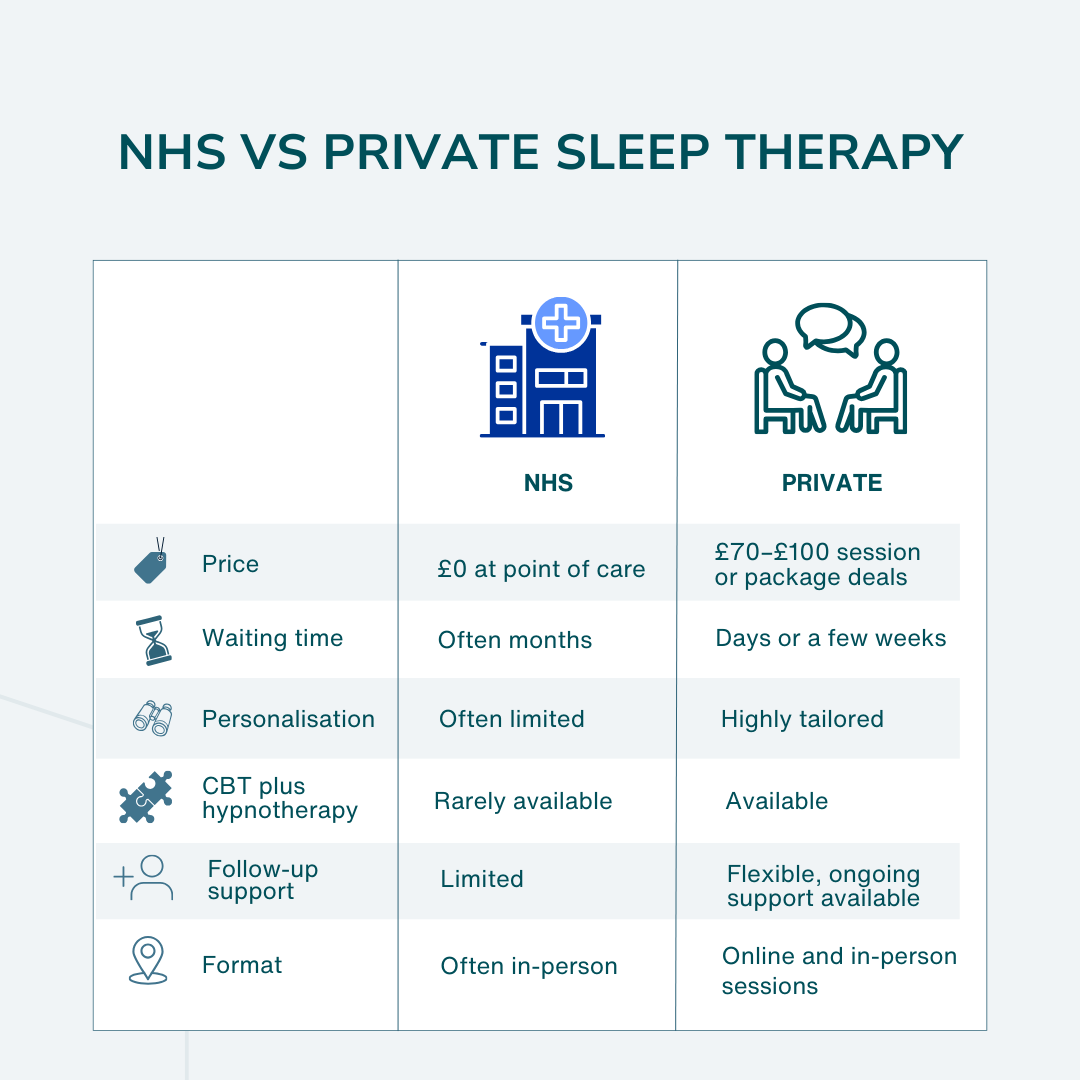
Here is a visual comparison of NHS versus private therapy for sleep:
Key takeaways
NHS support is free but specialist insomnia therapy is limited and not guaranteed
NHS waiting times for CBT and CBT-I are at least 3+ months
Digital options are available in some areas on the NHS
Private therapy tends to be more personalised and can draw on a broader variety of therapeutic methods
Private therapy can be £70–£100 per session, with packages offering better value and instalment plans to spread the cost
Committing to a package often produces the best outcomes for anxiety-driven insomnia
Look for qualified, experienced therapists who provide transparent pricing and tailored support.
Need help deciding how to address your sleep problems?
I’m very happy to help you weigh up the pros and cons of NHS treatment available to you versus private sleep therapy. Please feel free to get in touch via my contact form to arrange a free, no-obligation 30-minute chat about your sleep challenges.