

How Hypnotherapy Can Help with Insomnia

When people hear the word hypnotherapy, they often picture something dramatic such as swinging watches, loss of control or being “put under.” If you’ve ever wondered whether hypnotherapy could really help with insomnia, you’re not alone. Many people are curious… and a bit sceptical too.
The reality is far realistic and scientific than popular myths suggest.
At its core, hypnotherapy for insomnia is about helping your mind and nervous system rediscover something they already know how to do, namely to let go and allow sleep to happen naturally.
Insomnia isn’t just a thinking problem – it’s a nervous system problem
One reason insomnia can be so persistent is that it doesn’t live only in your thoughts. It also lives in your body.
If you recognise things like:
Racing thoughts at bedtime
A sudden surge of alertness when your head hits the pillow
Feeling exhausted but “wired”
Anxiety about whether you’ll sleep
then your nervous system is likely stuck in a pattern of heightened alertness, which means it is primed for threat rather than rest.
Hypnotherapy works with this underlying pattern.
Rather than analysing sleep or trying to force relaxation, hypnotherapy helps cultivate a calm, focused mindset where your system becomes more open to change. This isn’t a special or mysterious state. It’s the same everyday kind of absorption you experience when you’re lost in a book or daydreaming.
In this focused, receptive frame of mind, the nervous system naturally begins to settle. Breathing softens, muscle tension eases and the brain steps down from constant monitoring. This creates the conditions where new, more helpful ways of responding to bedtime can start to take root.
What hypnosis is (and what it isn’t)
Hypnosis is not unconsciousness. You are not asleep. You cannot be made to do anything against your will.
Research shows that hypnosis works by modifying naturally occurring physiological and psychological processes, including attention, expectation, imagery and autonomic nervous system activity. Brain imaging studies show changes in regions involved in emotional regulation, perception and self-monitoring during hypnosis, which are the same systems implicated in insomnia and anxiety.
Hypnosis doesn’t add something artificial. It works with systems that are already there. In other words, hypnotherapy harnesses naturally occurring mental phenomena to help your body and mind work for you, not against you.
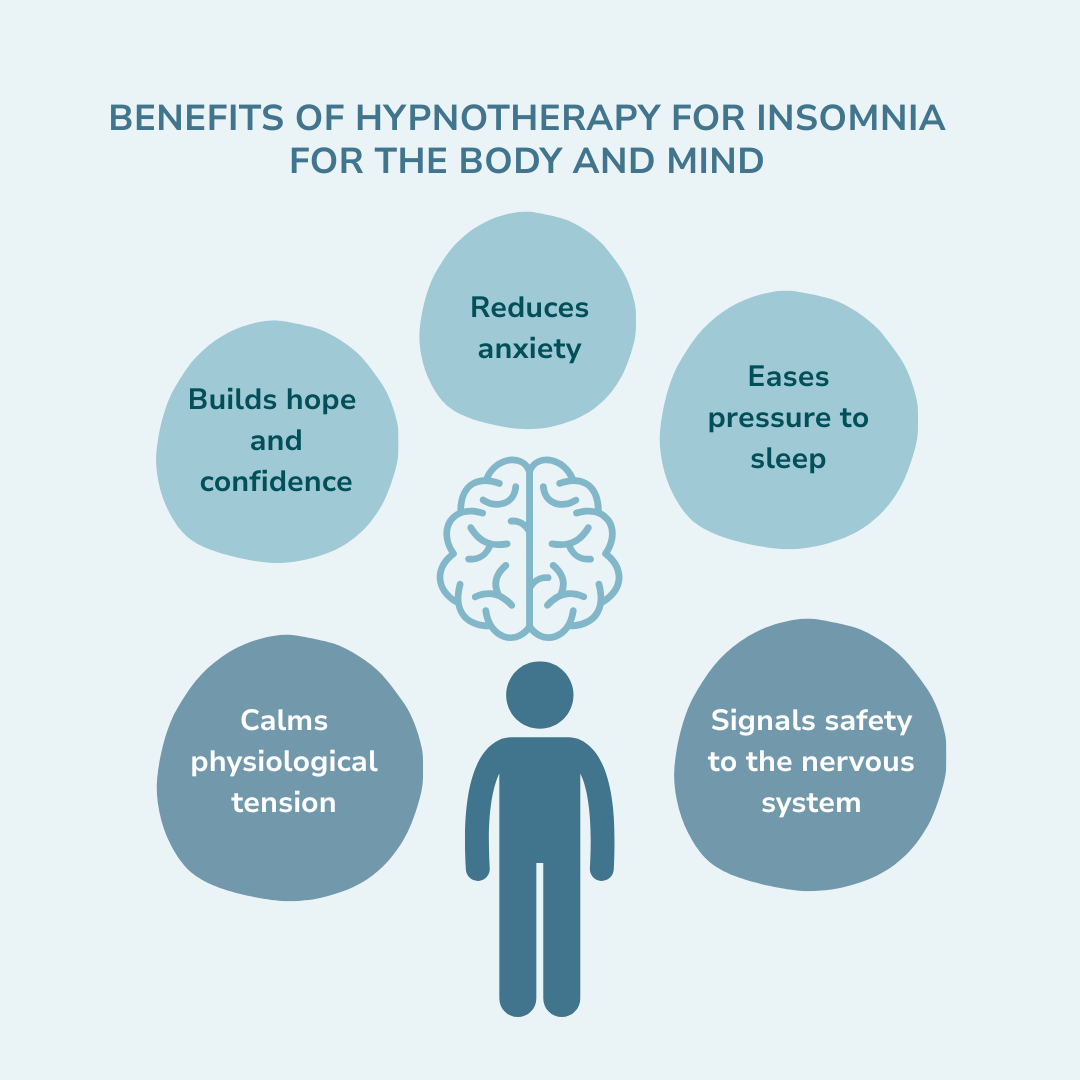
Why hypnotherapy can be so effective for insomnia
Hypnotherapy helps with sleep in several interconnected ways:
1. It calms the nervous system at a physiological level
Through focused attention, imagery, metaphor and gentle suggestion, hypnotherapy helps shift the body from a threat-based state into one of safety. This makes sleep possible again.
2. It reduces sleep anxiety without fighting it
Instead of trying to “stop” worrying (which often backfires), hypnotherapy changes your relationship with thoughts, allowing them to pass without triggering alarm.
3. It embeds new patterns on a deeper level
When the mind is in a receptive, focused state, new ways of responding to your bed, to wakefulness and to bodily sensations can be rehearsed and reinforced without pressure. This is especially helpful for people who feel stuck in an anxiety-sleep loop.
4. It uses imagination to rehearse rest
The brain responds to imagined experiences in many of the same ways as real ones. Hypnotherapy uses this to gently practise calmness, safety and rest in a no-risk way, making these states easier to access at night.
Why personalised hypnotherapy works better than generic hypnosis for sleep videos
Sleep hypnosis videos can be very soothing, but they’re also limited in their effectiveness.
A personalised hypnotherapy session is different because it:
Matches your current anxiety level, not a generic script
Uses imagery and metaphors that genuinely resonate with you
Adjusts pace, language and depth moment-by-moment
Responds to your specific sleep fears and patterns
If your nervous system doesn’t feel safe enough yet, a personalised approach can meet you where you are, rather than trying to push you somewhere you’re not ready to go.
This is often why people say, “Sleep videos help a bit, but not enough.”
Hypnotherapy works best as part of a thoughtful approach
Hypnotherapy isn’t about knocking yourself out. It’s about creating the right conditions for sleep to return.
When combined with CBT-based sleep therapy, hypnotherapy builds on practical changes and embeds them more deeply. This helps the body trust sleep again, not just understand it intellectually.
If insomnia has made sleep feel fragile or unreachable, hypnotherapy offers a different message: your system isn’t broken – it’s been trying to protect you.
With the right guidance, it can learn that night-time is safe again.
Interested in finding out if hypnotherapy can help with your insomnia?
If you’d like to further explore the use of hypnotherapy to treat insomnia, click here to get in touch with me.
We can have a free 30-minute, no-obligation chat about your sleep challenges and work out together whether this approach will work for you. I’m passionate about helping people overcome the misery of insomnia and I would love to help.