

Retirement and Sleep
Retirement is often spoken about as a finish line – the long‑awaited moment when work pressures fall away and life finally opens up. But anyone who has lived through this transition knows it’s far more complex than that. It’s a profound life stage, one Shakespeare might have recognised in his “seven ages of man”: a shift in identity, rhythm and meaning. And like any major transition, it can have a surprisingly strong impact on sleep.
If you’ve found that your sleep has become lighter, more fragmented or more unpredictable since retiring, you’re far from alone. There are understandable reasons for this, and – importantly – there are ways to regain confidence and steadiness around sleep.
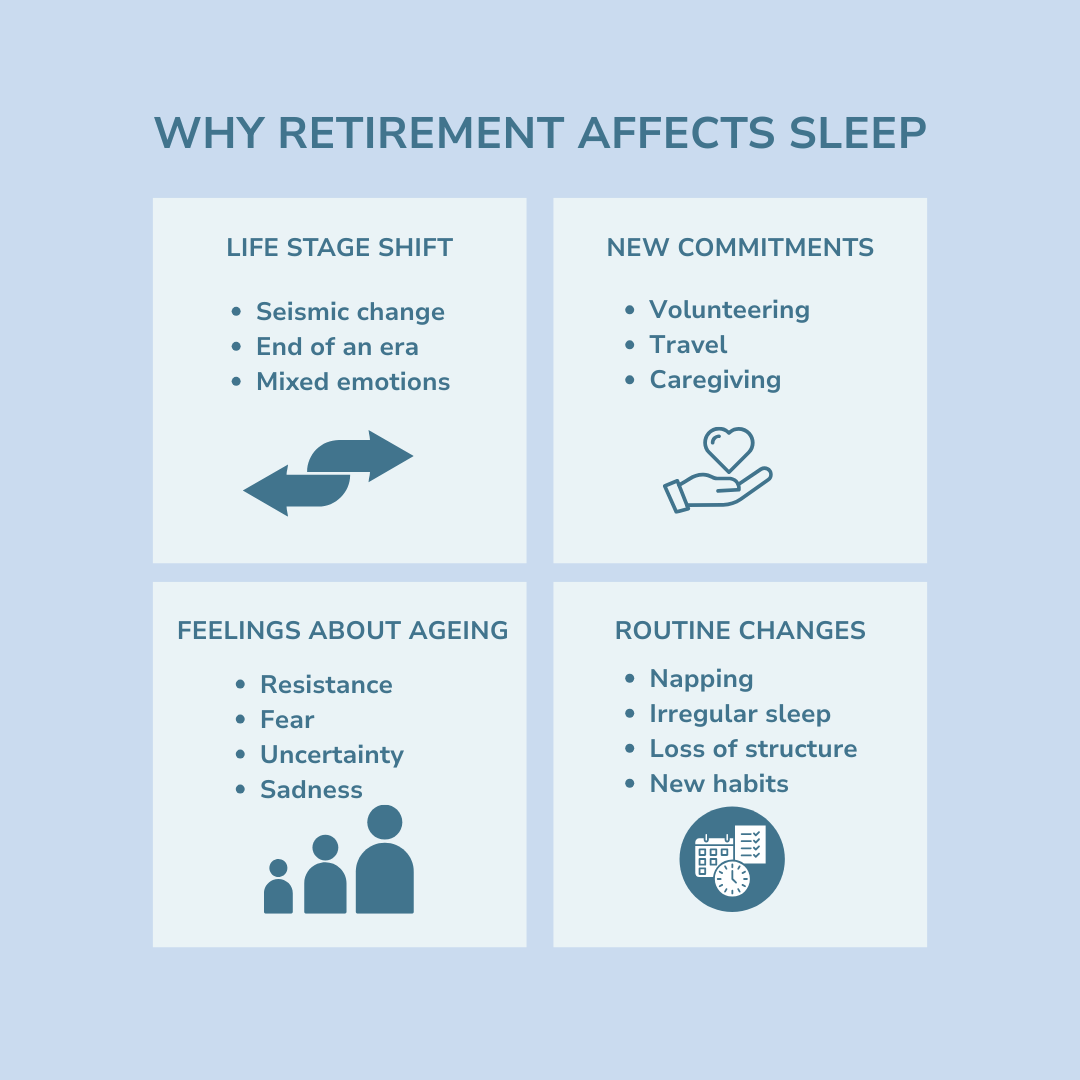
1. Retirement as a major life stage
Retirement isn’t simply stopping work. It’s a psychological milestone. For decades, work has shaped your days, your sense of contribution, your social interactions and often your identity. When that structure falls away, even if the change is welcome, it can feel strangely disorienting.
Many people describe mixed feelings: pride, relief, excitement – but also a sense of unfamiliarity, or even loss. These emotional shifts can subtly raise arousal levels in the body, making sleep feel less automatic than it once was. This isn’t a sign of failure – it’s a sign that your body and mind are adjusting to a new chapter in your life.
2. New commitments and changing roles
Retirement is rarely the quiet, empty space people imagine. In fact, life often becomes fuller in new ways. You might find yourself caring for grandchildren more regularly, supporting ageing parents or stepping into volunteering roles. These new commitments can be meaningful and energising, but they also change the shape of your days.
New responsibilities – especially those involving caregiving – can bring both joy and pressure. And when life becomes busy in unfamiliar ways, sleep can be one of the first things to wobble. Your mind may feel more on alert when your head hits the pillow or your days may become more irregular, making it harder for your body to settle into a predictable rhythm.
3. Reflecting on ageing
Retirement naturally invites reflection on ageing. This is a deeply personal process, and there is no single right way to feel about it. For some, it brings acceptance and perspective. For others, it stirs resistance, denial or discomfort.
These feelings are human, understandable and often unspoken. But they can influence sleep more than people realise. When difficult emotions sit just below the surface, the mind can become busier at night. Not because anything is wrong, but because transitions often bring long‑stored thoughts into the light.
Naming these feelings – even quietly to yourself – can reduce the internal tension that keeps the nervous system alert.
4. A change in routine (and why it matters for sleep)
One of the biggest shifts in retirement is the loss of built‑in structure. At first, this can feel liberating. No alarm clock. No commute. No deadlines. But over time, the lack of routine can lead to habits that unintentionally disrupt sleep.
Common patterns include:
Napping for long periods or late in the day
Going to bed earlier “just because you’re tired”
Sleeping in to make up for a poor night
Eating or exercising at irregular times
None of these behaviours are bad per se, but they can confuse the body’s internal clock, making sleep feel less reliable.
What helps: honesty, awareness and a plan
Once you understand the forces at play, the next step is a gentle kind of honesty – with yourself and, if helpful, with a therapist.
1. Being honest about thoughts and beliefs
What do you tell yourself about sleep? About ageing? About retirement? These thoughts can shape your emotional landscape at night. Bringing them into the open reduces their power.
2. Being honest about habits and behaviours
Small changes in routine can have a big impact. Noticing patterns without judgement is the first step toward resetting your sleep rhythm.
3. Talking it through
Many people find it easier to make sense of these changes with a therapist who understands the emotional and behavioural layers of sleep. Having a plan – one that feels realistic and compassionate – can make the whole process feel lighter.
Two futures: The one you’re in – and the one you can move toward
If sleep difficulties are left unaddressed, it’s common to see a cycle of increasing worry, more disrupted nights and a shrinking sense of confidence. Retirement can start to feel smaller, more constrained and more tiring than it needs to be.
But there is another path.
With support, clarity and a structured approach, it’s entirely possible to rebuild trust in your ability to sleep. Many people find that once they understand what’s happening – and once they have a plan – their nights become calmer and their days feel more spacious and enjoyable.
Good sleep doesn’t just improve rest. It restores confidence, steadiness and pleasure in this new chapter of life. As Shakespeare wrote, sleep “knits up the ravell’d sleeve of care,” and when it begins to feel reliable again, many people notice that retirement opens up in ways that feel richer and more enjoyable. With calmer nights comes a renewed sense of ease – and retirement truly becomes something to savour.
If you’d like some support in making sense of your sleep difficulties and creating a plan that feels realistic and compassionate, you’re welcome to get in touch. I offer a free, no‑obligation 30‑minute consultation, and you can arrange it easily through my contact form here.