

When sleep becomes a struggle
Sleep is supposed to be natural. Effortless, even. Yet for many people, it becomes one of the hardest parts of the day.
If you’re reading this, chances are sleep has stopped feeling restorative and started feeling stressful. Bedtime might come with dread. Your mind may race just when you want it to slow down. You might lie awake wondering why your body won’t do the one thing it’s meant to do.
Sleep therapy exists for this exact reason. Not because you’re broken, but because sleep problems are often maintained by understandable patterns of anxiety, habit and physiology that can be untangled and treated.
This post explains:
What sleep therapy actually is (and what it isn’t),
How it works in practice,
And who it’s most helpful for.
My hope is that by the end, you’ll feel more informed, less alone and more hopeful.
Why I care about sleep
My interest in sleep therapy is deeply personal. When my daughter was young, we struggled with her sleep, and I saw first-hand how disrupted nights affected every part of her life, including her mood, confidence and even her ability to attend school. It made me acutely aware of how quickly sleep loss can spill into daily life, and how invisible that struggle often is from the outside.
Later, during my psychotherapy training, I worked with a volunteer whose long-standing insomnia was driving anxiety, physical exhaustion and a growing sense of hopelessness. He struggled to fall asleep, woke unpredictably during the night and felt increasingly unwell as a result. Watching his transformation as sleep anxiety eased and seeing how much better his life became was profoundly moving. It was then that I knew sleep therapy was the work I wanted to specialise in.
Feeling stuck with sleep anxiety or insomnia? You don’t have to face it alone. Click here to get in touch to arrange a short, friendly chat to find out if sleep therapy is the right fit for you.
What is sleep therapy?
Sleep therapy is a structured, supportive way of helping people improve sleep by addressing the thoughts, behaviours, emotions and physical responses that interfere with rest.
Rather than forcing sleep or chasing the “perfect routine”, sleep therapy focuses on:
Reducing sleep-related anxiety,
Calming the nervous system,
Rebuilding confidence in your ability to sleep.
Importantly, sleep therapy isn’t about trying harder. In fact, many sleep problems are made worse by effort, pressure and fear. Therapy helps you step out of that struggle.
What sleep therapy is not
Before going further, it’s helpful to clear up a few common misconceptions.
Sleep therapy is not:
A collection of generic sleep hygiene tips you’ve already tried,
A one-size-fits-all programme,
Relaxation alone,
Watching hypnosis videos and hoping for the best.
While good habits and relaxation matter, they rarely solve ongoing insomnia by themselves, especially when anxiety has become part of the picture.
Sleep therapy is personalised and collaborative.
Why sleep problems often persist
Many people assume insomnia means something is “wrong” with them. But most long-term sleep difficulties are maintained by a self-reinforcing cycle.
It often looks something like this:
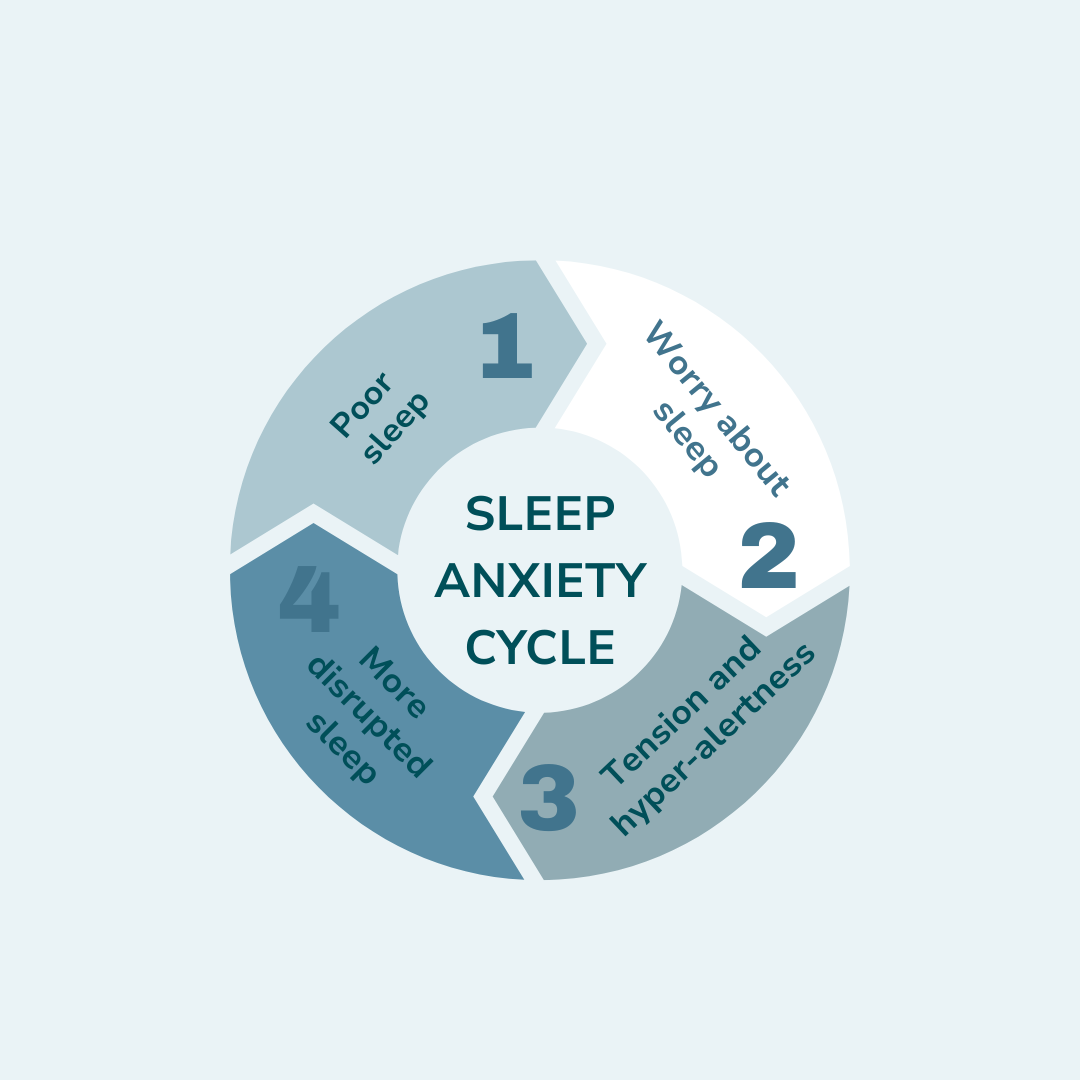
Over time:
The bed becomes associated with stress rather than rest,
The nervous system stays on high alert at night,
Sleep itself becomes something to be hypervigilant about and to fear.
None of this means you’re doing anything wrong. It means your system has learned to stay vigilant. But the good news is that you can train yourself to respond differently.
How sleep therapy works
Sleep therapy works by addressing sleep from multiple angles, rather than focusing on just one piece of the puzzle.
At its core, it helps you:
Understand what’s driving your sleep difficulties,
Change unhelpful patterns gently and strategically,
Calm the body so sleep can return naturally.
In my work, this usually involves a blend of CBT-based approaches and hypnotherapy, supported by mindfulness and somatic techniques.
CBT-based approaches for sleep
CBT (Cognitive Behavioural Therapy) looks at how thoughts, beliefs and behaviours interact with sleep. CBT-I (Cognitive Behavioural Therapy for Insomnia) is a special form of cognitive behavioural therapy that has been developed to addresses sleep issues specifically. It is available on the NHS and privately through trained practitioners. I use techniques from CBT-I alongside other therapeutic methods, including hypnotherapy.
In sleep therapy, CBT-based work focuses on helping you:
Spot patterns of thinking that increase pressure or fear around sleep,
Reduce behaviours that unintentionally keep insomnia going,
Create a practical roadmap for change.
This part of the work is thoughtful and strategic. It’s not about “positive thinking”, but about accurate, helpful thinking.
Hypnotherapy for sleep
Hypnotherapy works at a deeper, physiological level.
Using focused attention and imagination, it helps:
Calm an overactive nervous system,
Reduce physical tension,
Embed new, healthier responses to bedtime and night-time waking.
Hypnotherapy also allows us to rehearse new ways of being in a safe, no-risk way that makes those responses easier in real life.
Why they work so well together
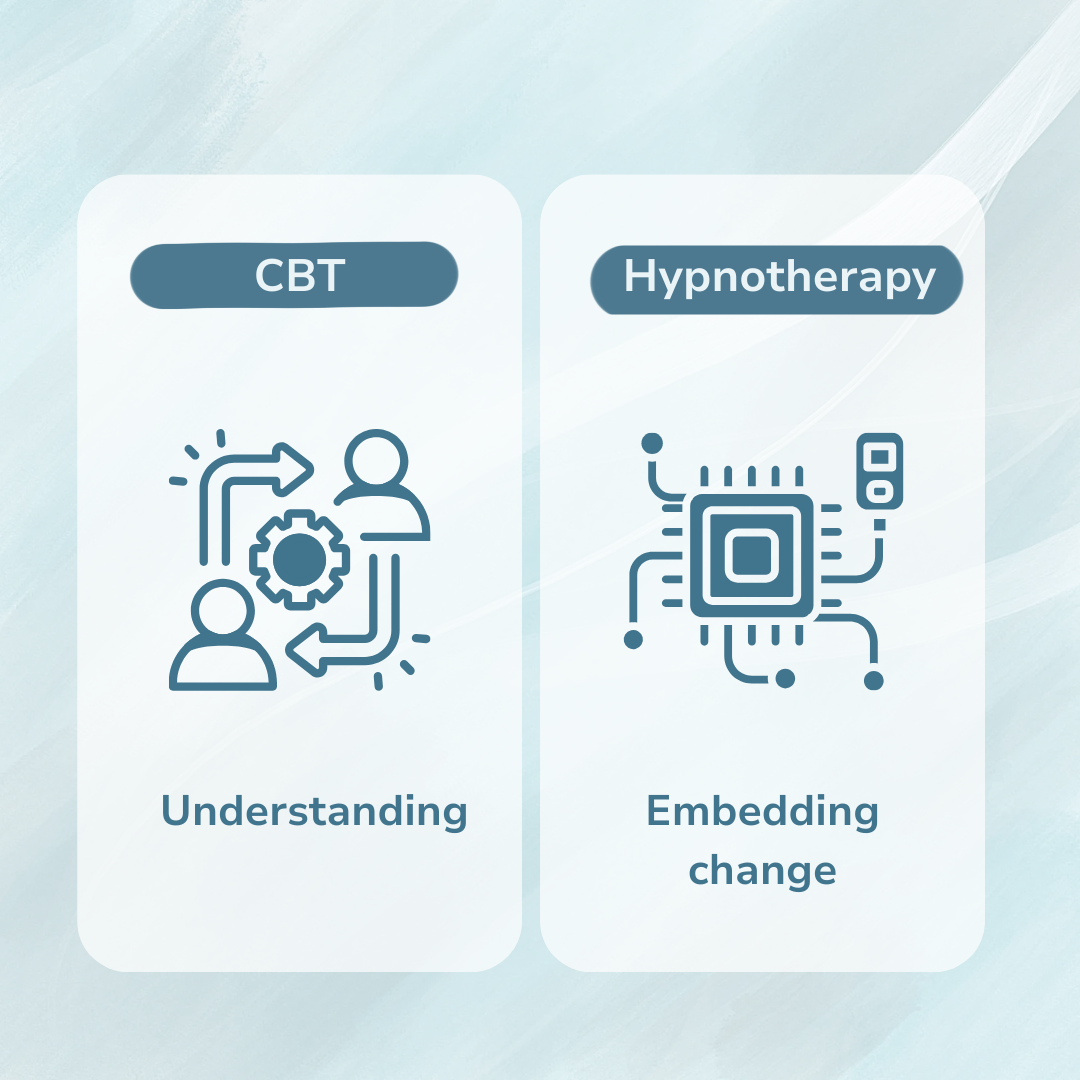
CBT helps you understand what needs to change and why.
Hypnotherapy helps your system actually absorb those changes.
Together, they:
Reduce fear and hyper-vigilance,
Rebuild trust in sleep,
Support change that feels embodied, not forced.
What happens in sleep therapy sessions?
Although everyone’s journey is slightly different, sleep therapy usually follows a clear structure.
1. Understanding your sleep story
We begin by exploring your sleep patterns, history, stressors, and beliefs. We don’t just focus on how you sleep, but how you feel about sleep.
2. Identifying what’s keeping the cycle going
This might include anxiety, habits, expectations or physical arousal that have built up over time.
3. Creating a personalised plan
Rather than generic advice, you’ll have a clear, realistic plan tailored to your life and nervous system.
4. Practising new responses
Through CBT-based tools, hypnotherapy and gentle practice between sessions, new patterns begin to take hold.
5. Rebuilding confidence
As sleep improves, confidence grows, which often accelerates change.
Who does sleep therapy help?
Sleep therapy can be particularly helpful if you:
Struggle to fall asleep or stay asleep
Wake in the early hours with a racing mind
Feel anxious or tense at bedtime
Worry about the impact of poor sleep
Feel “tired but wired”
Have tried lots of solutions without lasting success
It’s especially effective when insomnia has become psychological or psycho-physiological. This is when anxiety, habits and nervous system arousal are playing a role in stopping you from getting good sleep.
What about medical sleep problems?
Some sleep difficulties have a medical basis, such as:
Sleep apnoea,
Restless legs syndrome,
Chronic pain,
Medication effects,
Hormonal and neurological conditions.
Sleep therapy doesn’t replace medical care and it’s important these conditions are assessed appropriately.
However, even when there is a medical factor, people often develop sleep anxiety and conditioned wakefulness on top of it. Sleep therapy can support these layers alongside medical treatment.
Does sleep therapy work if you’ve had insomnia for years?
This is one of the most common questions I get asked.
And the answer is yes. Long-standing insomnia can still improve.
The length of time you’ve struggled doesn’t predict how stuck you are. What matters more is:
Whether the problem is being maintained by anxiety and habits,
Whether you’re open to working gently and consistently with your system.
Many people feel better not because they “sleep perfectly”, but because sleep stops dominating their thoughts and emotions. And paradoxically, sleep improves as a result.
What sleep therapy feels like (in real life)
People often expect therapy to feel heavy or intense. In reality, sleep therapy is usually:
Calm and supportive
Practical and focused
Collaborative rather than prescriptive
Paced to suit your energy and life
There’s space for curiosity and fun. My clients tell me how relieved they feel when they realise they’re not broken, just caught in a pattern.
Key takeaways
Sleep therapy helps remove the obstacles that block natural sleep
It addresses thoughts, habits, emotions, and the nervous system
Anxiety around sleep is common and treatable
Change doesn’t come from trying harder, but from working differently
Even long-term sleep problems can improve with the right support
If sleep has started to feel like a battle, it doesn’t have to stay that way. With the right support, your system can re-learn how to rest.
Ready to reclaim your sleep?
If insomnia or sleep anxiety are holding you back, personalised sleep therapy can help. I offer support in Worcester and online, combining CBT techniques with hypnotherapy.
It will take 2 minutes to complete my contact form. I’ll get back to you to arrange a time to have a free 30-minute call to talk through your sleep challenges and for us to decide whether we will work well together. Looking forward to hearing from you :-)